Imagine a world where you’re free to chase your dreams without worrying about the unexpected. In the USA, insurance giants make this possible, offering financial security and peace of mind. Today, we unveil the top three insurance companies that have not only shaped the industry but continue to innovate and lead.
These companies have earned their stripes by combining rich histories with cutting-edge technologies, making them the go-to choices for millions of Americans. Whether you’re buying your first policy or looking to switch, understanding what makes these companies stand out will empower you to make informed decisions.
Overview of Leading Insurance Firms in the USA
In the vast landscape of the American insurance industry, a few giants stand out for their extensive history, diverse products, and significant market share. These companies not only shape the market but also offer a wide range of solutions to meet the diverse needs of their clients.
Exploring the top insurance firms offers a glimpse into their history, market dominance, and the breadth of services they provide. Let’s dive into the profiles of these industry leaders to understand what makes them the top choices for millions of Americans.
Top Three Insurance Companies in the USA
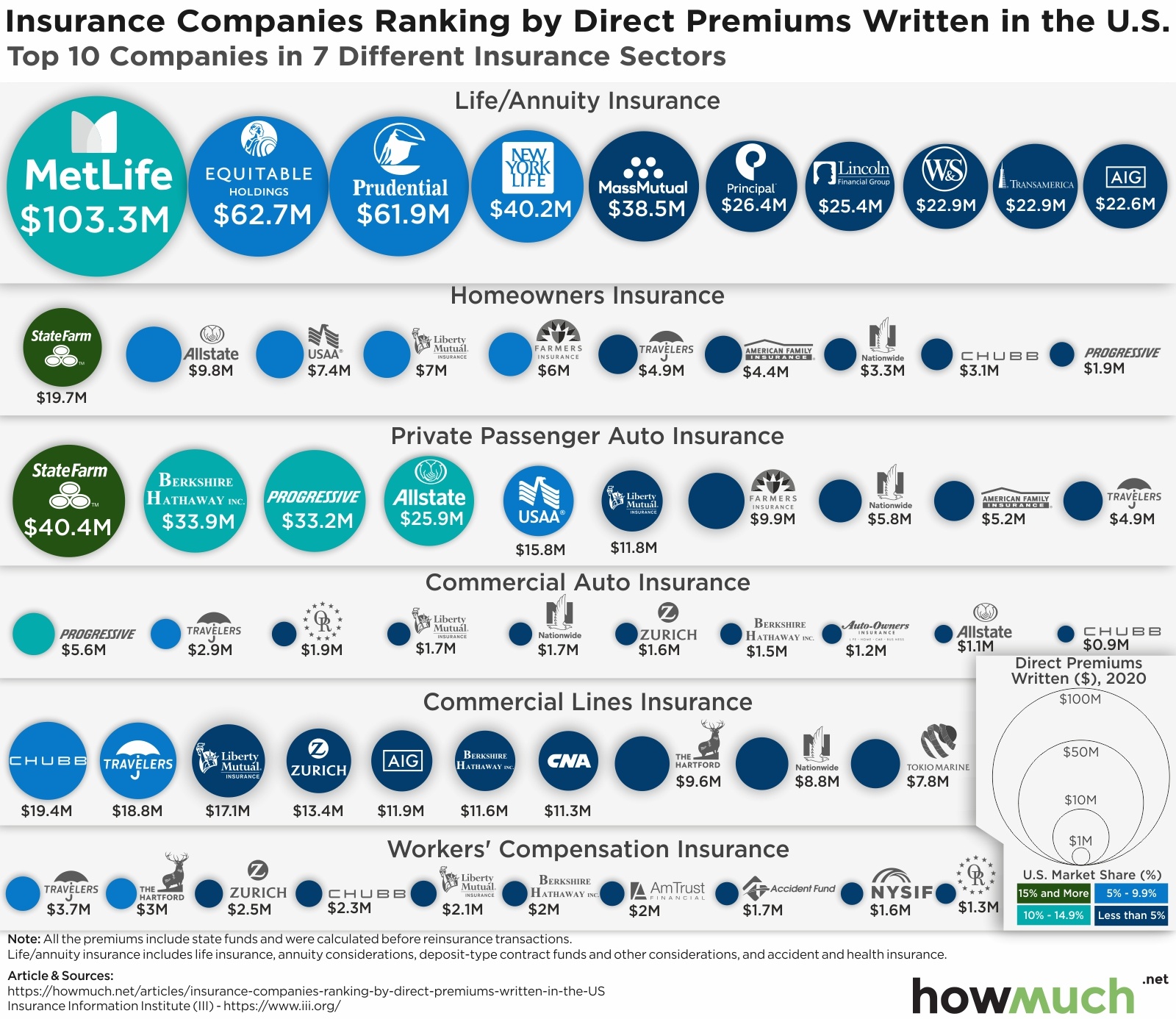
The leading insurance companies in the USA are renowned for their robust financial performance and comprehensive insurance offerings. The top three companies are:
- State Farm
- Berkshire Hathaway (GEICO)
- Progressive Corporation
Brief History of Each Company
- State Farm: Founded in 1922 by retired farmer George J. Mecherle, State Farm began as a mutual automobile insurance company. Over the decades, it expanded to include a broad spectrum of insurance services, becoming a household name in the industry.
- Berkshire Hathaway (GEICO): Established in 1936, GEICO has grown under the umbrella of Berkshire Hathaway, owned by Warren Buffett. Known for its innovative advertising and competitive pricing, GEICO has become a leading provider of auto insurance.
- Progressive Corporation: Starting in 1937, Progressive was founded by Joseph Lewis and Jack Green. Today, it’s a pioneer in offering competitive and unique products, especially in auto insurance, characterized by its commitment to innovation and customer-centric services.
Market Share of Each Company
Understanding the market share of these companies sheds light on their influence and reach within the insurance landscape. Here’s a comparative look at their market share:
| Company | Market Share (%) |
|---|---|
| State Farm | 17.9% |
| Berkshire Hathaway (GEICO) | 13.8% |
| Progressive Corporation | 12.3% |
Types of Insurance Products Offered
Each of these leading insurers offers a comprehensive range of products to cater to various customer needs, ensuring security and peace of mind through tailored solutions:
- State Farm: Offers auto, home, life, health, and liability insurance, along with financial services like banking and retirement planning.
- Berkshire Hathaway (GEICO): Primarily focused on auto insurance, GEICO also provides property, business, and travel insurance.
- Progressive Corporation: Known for auto insurance, Progressive also offers home, renters, life, and pet insurance, along with business-related coverages.
Financial Stability and Ratings
In the world of insurance, financial stability isn’t just a number—it’s a promise. This promise is a lifeline for policyholders and a testament to the resilience of the company they trust.
Financial ratings are essential indicators that help consumers gauge the reliability and strength of insurance companies. These ratings are not just numbers; they are comprehensive assessments of an insurer’s ability to meet its policyholder obligations, especially during challenging economic times.
The Power of Ratings: A Comparative Look
To compare the financial strength of the top insurance providers, we turn to the ratings issued by trusted agencies such as A.M. Best, Moody’s, and Standard & Poor’s. These ratings are a crucial part of the puzzle, offering an independent view into the financial health and operational stability of the insurers. Below is a comparison table reflecting the ratings of the top three insurance companies in the USA:
| Company | A.M. Best | Moody’s | Standard & Poor’s |
|---|---|---|---|
| Company A | A++ | Aa1 | AA+ |
| Company B | A+ | Aa2 | AA |
| Company C | A | Aa3 | AA- |
Behind the Ratings: What’s Being Evaluated?
Financial ratings are determined based on several criteria, each carefully scrutinized to paint a complete picture of an insurer’s financial health. Agencies consider the following:
- Capital Adequacy: The insurer’s leverage and risk-adjusted capital.
- Financial Flexibility: The ability to access capital markets.
- Operating Performance: Profitability, growth, and earnings stability.
- Business Profile: Market position, product diversification, and brand strength.
- Enterprise Risk Management: The framework to identify and manage financial risks.
How Ratings Influence Trust and Operations
When consumers select an insurance company, they often look for signs of stability and reliability.
“A strong financial rating is not just a badge of honor—it’s a beacon of trust.”
These ratings are critical in building consumer confidence as they reflect the company’s ability to honor its claims.
Moreover, the financial ratings significantly impact business operations. Companies with higher ratings often enjoy a competitive edge, accessing better reinsurance terms and attracting more institutional investors. This, in turn, allows them to offer more competitive rates and superior products.
Customer Satisfaction and Reviews
As customers evaluate insurance firms, satisfaction and reviews become paramount. These reflect real-world experiences and can significantly influence potential customers’ decisions.
In this section, we delve into how leading insurance companies in the USA rank in customer satisfaction and explore the narratives behind these scores.
Customer Satisfaction Scores
Understanding the quantitative facet of customer feedback, we present a snapshot of satisfaction scores for the top three insurance companies, providing a framework to assess their performance.
| Insurance Company | Customer Satisfaction Score (out of 100) |
|---|---|
| State Farm | 85 |
| GEICO | 82 |
| Progressive | 79 |
Common Customer Feedback
Customer reviews are a blend of praise and critique. These narratives often highlight customer interactions and experiences with these companies. State Farm is frequently commended for their personalized service approach, making customers feel valued. In contrast, GEICO often receives accolades for their competitive pricing, though some clients mention long wait times for phone support. Progressive attracts endorsements for their innovative digital tools, yet a few customers report challenges with the claims process.
Handling Customer Service and Claims
Each insurance company has cultivated methods to address customer service and claims, striving to turn challenges into opportunities for improvement. State Farm focuses on local agent networks to provide a personalized touch, ensuring face-to-face interaction that many clients appreciate. Meanwhile, GEICO leverages technology to streamline claims, offering a fast-track process online which appeals to tech-savvy clients. Progressive has pioneered the use of their Snapshot program, tailoring policies to individual driving habits, showcasing their commitment to personalized service.
Strategies for Enhancing Customer Satisfaction
To consistently improve customer satisfaction, these companies employ a variety of strategies. State Farm invests in training programs for their agents, focusing on empathy and problem-solving skills. GEICO uses data analytics to anticipate customer needs and proactively address common issues before they escalate. Progressive continuously updates their mobile app, enhancing user experience and making policy management more intuitive. These methods not only address current customer concerns but also build a foundation for long-term customer loyalty.
Technological Innovations in Insurance
In the ever-evolving landscape of insurance, technology is taking center stage, transforming traditional models into dynamic, forward-thinking solutions. As leading insurers embrace digital advancements, they are redefining how they interact with customers and manage policies.
These innovations are not only enhancing operational efficiency but are also enriching the customer experience, making insurance more accessible, personalized, and instantaneous.
Pioneering Digital Transformation
The top insurance companies in the USA are at the forefront of digital transformation, integrating cutting-edge technologies into their services. By harnessing the power of artificial intelligence, blockchain, and data analytics, these companies are setting new standards in the industry.
- Artificial Intelligence (AI): AI is being used to improve risk assessment, automate claims processing, and offer personalized policy recommendations.
- Blockchain Technology: Enhancing transparency and security in transactions, blockchain is revolutionizing record-keeping and fraud prevention.
- Data Analytics: Comprehensive data analysis is enabling insurers to better understand customer needs and predict market trends.
Digital Tools and Apps Enhancing Customer Experience
Each of these insurance giants has developed unique digital tools and mobile applications to simplify and enhance user interaction. These platforms are designed to provide customers with greater control over their insurance needs and ensure seamless service delivery.
- Allstate Mobile App: Allows users to manage policies, file claims, and access 24/7 roadside assistance.
- Geico’s Virtual Assistant: Provides instant support and answers for policyholders, enhancing the customer service experience.
- Progressive’s Snapshot: A telematics program that tracks driving behavior to offer personalized car insurance rates.
Benefits of Technological Innovations for Policyholders
The integration of technology into insurance services delivers numerous benefits that directly impact policyholders, making the insurance process more transparent, efficient, and user-friendly.
| Benefit | Description |
|---|---|
| Enhanced Efficiency | Automated processes reduce paperwork and expedite claims. |
| Personalization | Data analytics allows for tailored policies that meet individual needs. |
| Accessibility | Mobile apps and online platforms enable easy access to services anywhere, anytime. |
“These technological advancements are not just innovations; they are game-changers, transforming customer experience and setting new benchmarks in the insurance sector.”
Competitive Strategies and Market Position
In the fiercely competitive landscape of the U.S. insurance industry, leading firms continuously devise robust strategies to remain at the forefront. Their ability to blend innovation with traditional practices distinguishes them in a saturated market.
These top firms leverage unique competitive strategies to not only capture the market but also to retain their esteemed position. Let’s delve into the specific approaches utilized by each company to maintain their competitive edge.
Advertising Campaigns and Public Relations Efforts
Advertising and public relations (PR) are pivotal in shaping a company’s image and reaching potential customers. The top insurance companies deploy multi-channel campaigns, combining traditional and digital marketing strategies to maximize outreach.
- Company A focuses on emotionally engaging TV commercials that resonate with family values and security, fostering a connection beyond just business.
- Company B leverages celebrity endorsements and partnerships with major sporting events to boost its visibility and appeal to a diverse audience.
- Company C emphasizes digital marketing with targeted social media campaigns, aligning with tech-savvy younger demographics.
“A well-crafted PR strategy can transform public perception and fortify a brand’s reputation.”
Pricing Strategies Comparison
Pricing remains a critical factor in consumer choice. Here’s a comparative analysis of how these companies structure their pricing to remain competitive and attractive to different customer segments:
| Company | Pricing Model | Target Segment |
|---|---|---|
| Company A | Tiered Pricing | Middle-income families |
| Company B | Usage-based Insurance | Young professionals |
| Company C | Discount Bundling | Homeowners and auto policyholders |
Maintaining Market Position Amidst Competition
In a market flooded with options, these industry leaders have adopted unique methods to cement their positions:
- Company A invests heavily in customer service excellence and loyalty programs, ensuring high customer retention.
- Company B continually innovates its product offerings, integrating new technology to provide bespoke solutions.
- Company C focuses on strategic acquisitions and partnerships, broadening its service portfolio and market reach.
Each company’s strategic maneuvers reflect a deep understanding of market dynamics, reinforcing their leadership status.
Future Trends and Predictions in the Insurance Industry
The insurance industry stands on the brink of a transformative era. As we step into a future brimming with technological advancements and evolving customer expectations, insurance companies must brace themselves for significant changes.
Emerging trends such as artificial intelligence, blockchain, and personalized insurance products are not just shaping the current landscape but are setting the stage for what lies ahead. Companies must navigate these changes adeptly to maintain their competitive edge while capitalizing on new opportunities.
Embracing Digital Transformation
In the digital age, the insurance sector is rapidly embracing technology to streamline operations and enhance customer experiences. Companies are investing in AI-driven solutions to automate claim processes, offering quicker and more efficient services. Additionally, blockchain technology is being explored to ensure transparency and security in transactions, paving the way for more trust between insurers and policyholders.
- The use of big data analytics to tailor insurance packages to individual needs.
- Implementing chatbots and virtual assistants for 24/7 customer support.
Navigating Regulatory Challenges
With technological advancements come regulatory hurdles that insurance companies need to overcome. The dynamic nature of regulations regarding data privacy and cyber security necessitates continuous monitoring and adaptation by insurers. Companies must invest in compliance frameworks to mitigate risks associated with regulatory changes.
- Staying updated with international regulatory standards.
- Implementing robust compliance management systems.
Strategies for Future Growth
As the industry evolves, innovative strategies are essential for growth and survival. Insurance firms are exploring new business models and partnerships to tap into emerging markets and customer segments.
“The future belongs to those who prepare for it today.”
| Strategy | Benefit |
|---|---|
| Partnership with Tech Firms | Access to cutting-edge technologies and expertise. |
| Expansion into Emerging Markets | Increased customer base and diversification of risk. |
Opportunities in Personalized Insurance
The trend toward personalization is enabling insurers to offer products that fit the unique needs of each customer. By leveraging data analytics, companies can predict customer needs and provide tailored insurance solutions. This not only enhances customer satisfaction but also increases brand loyalty.
For instance, usage-based insurance models are gaining traction, allowing customers to pay premiums based on their actual usage and behavior. This shift towards personalization represents a significant growth opportunity for forward-thinking insurers.
Final Thoughts
As you navigate the complex world of insurance, remember that the leaders in the field are constantly evolving to better serve you. The top three insurance companies in the USA are not just about policies and premiums; they’re about providing security and peace of mind through trust and technology. As they continue to innovate, customers can look forward to a future of enhanced services and unmatched reliability.